
Seamless gutter installation
A contractor measures each run and forms continuous lengths to reduce joints. You'll still have corners and downspout outlets, but fewer seam locations to maintain.
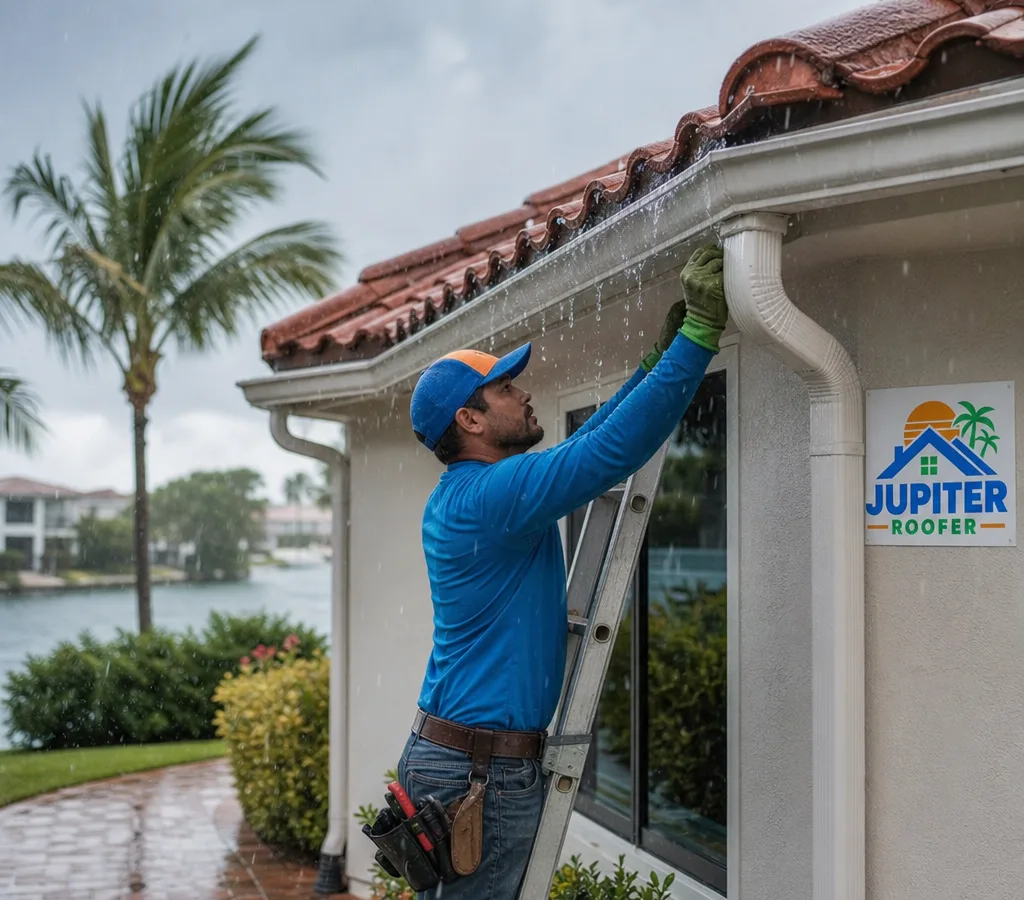
Describe the drip, overflow, or upgrade you're planning once, and we'll connect you with a local contractor who handles gutter work in your area.
Searching for gutters Jupiter usually means one of four things: installing new gutters, adding protection like guards, cleaning out debris, or fixing leaks and pitch problems. A gutter system's job is simple: collect roof runoff and move it to downspouts that discharge away from the foundation, landscaping, and entryways.
In Jupiter, heavy rain can expose weak spots fast. Overflow at a corner, water streaks on stucco, or pooling near a walkway often points to a clogged run, a loose hanger, a separated seam, or a downspout that is not taking water far enough from the structure.
A contractor who focuses on gutters will generally look at:
If you call Jupiter Roofer, you can describe what you're seeing—where the water goes, when it happens, and what parts overflow—and we'll connect you with a local contractor who can inspect, explain options, and quote the work directly.
Some homeowners are also thinking about roof-edge water control because of roofing wear or a recent replacement. If you're coordinating both, roofing in Jupiter and gutter work are often discussed together so drip edge, flashing, and gutter placement don't fight each other.
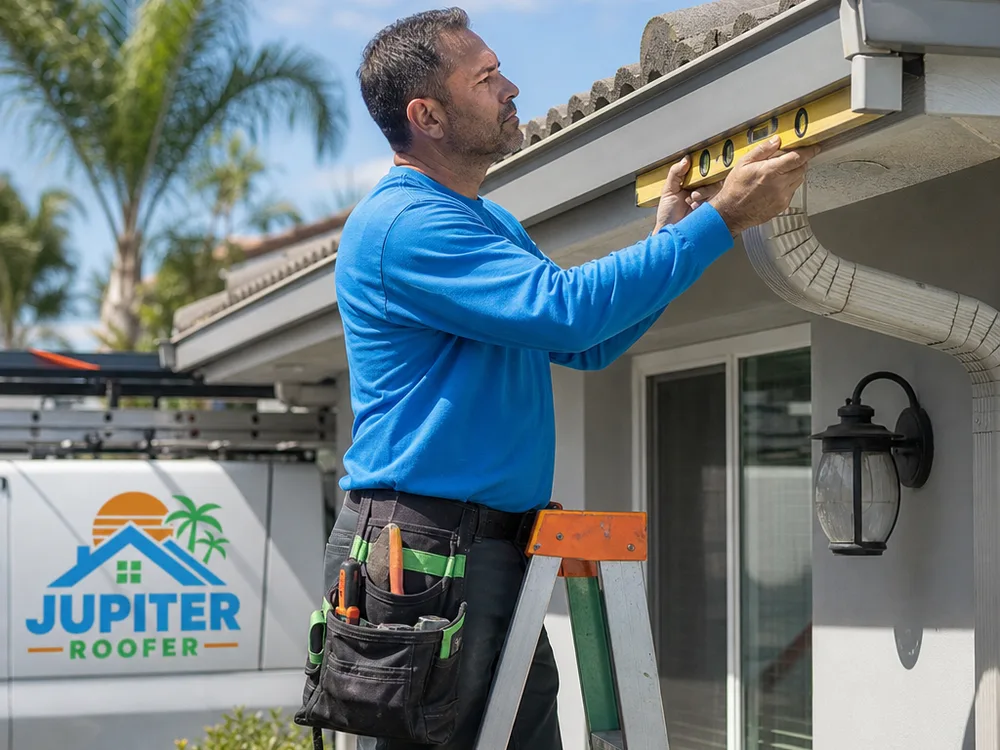
A contractor measures each run and forms continuous lengths to reduce joints. You'll still have corners and downspout outlets, but fewer seam locations to maintain.
Fixes can include sealing leaking joints, replacing damaged sections, adding hangers, adjusting slope, or resetting downspouts that pull away from the wall.
Cleaning usually means clearing roof grit, leaves, and shingle granules, then checking that each downspout flows and that no sections hold standing water.
Different guard styles handle debris differently. A contractor can recommend options based on roof type, nearby trees, and how often clogs show up.
Relocating a downspout, adding an outlet, or extending discharge can reduce pooling near entries, garage slabs, and planting beds.
Share what's happening—overflow, leaking seams, sagging, or staining—where it's happening, and whether you're looking for a fix or a full replacement.
Jupiter Roofer routes your call to an independent contractor who works on gutters in the Jupiter area and can talk through next steps.
They may ask about roof height, gutter material, where downspouts discharge, and whether water is getting behind the gutter or simply overflowing.
The contractor explains options—repair versus replacement, size changes, and guard types—and provides their pricing and schedule. You decide whether to move forward.
If water is spilling over the edge, dripping at a corner, or carving ruts in the landscaping, describe what you're seeing once and get connected with a local contractor who handles gutters.
CALL NOW: (561) 468-6229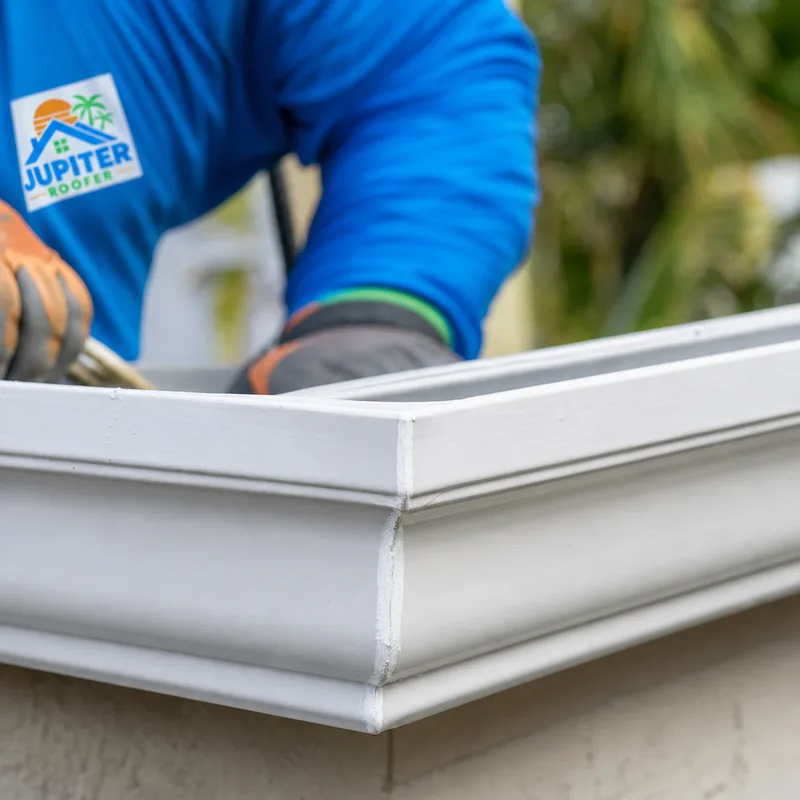
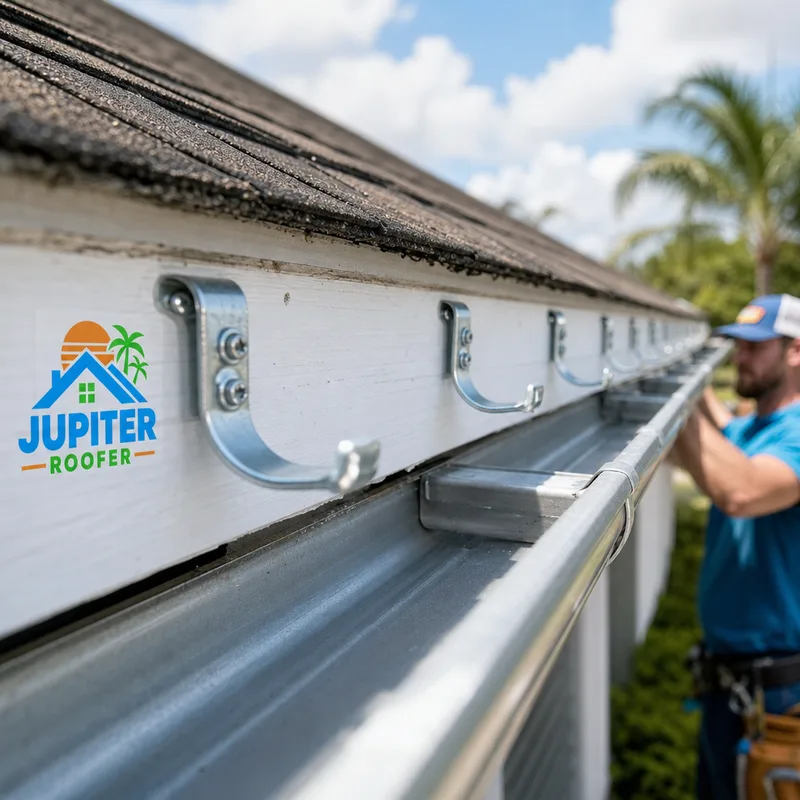
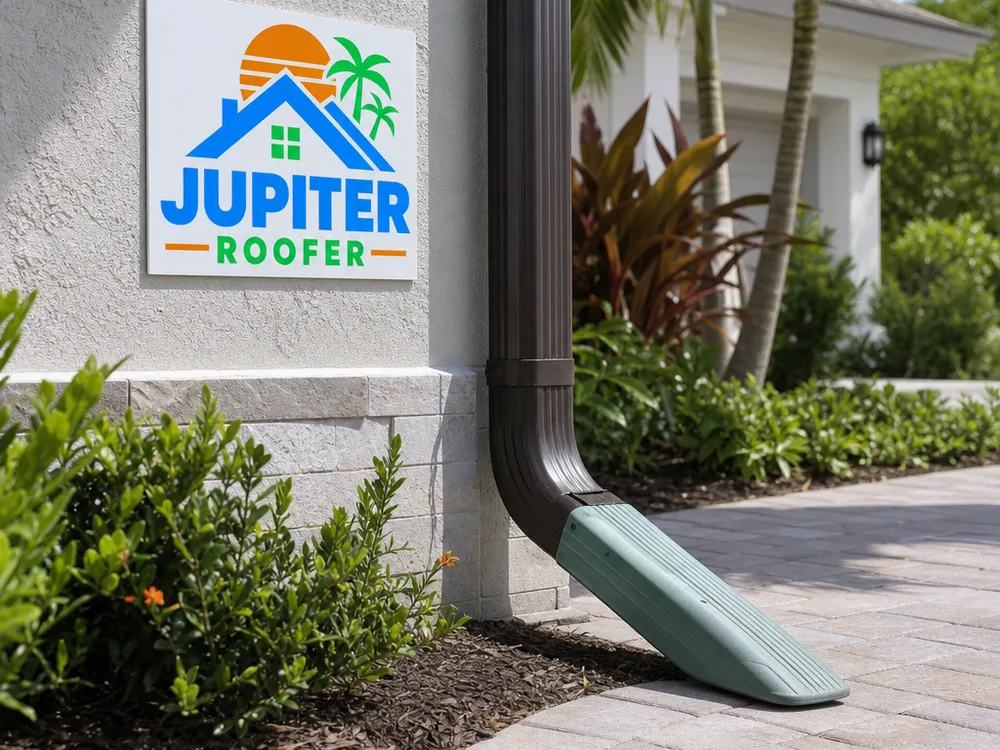

If the problem is limited to a few leak points, a loose downspout, or a short section that sags, a repair is often on the table. Replacement is more likely when long runs are warped, multiple seams leak, the gutter line has widespread slope issues, or the attachment surface along the fascia is failing. When you call, tell us how many spots are acting up and whether the gutter line looks straight, and we'll connect you with a contractor who can confirm onsite.
The most useful details are where overflow or dripping happens, whether it's only during heavy rain, and where the downspouts discharge. If you know the home's height—one story versus two—and whether the gutters are aluminum, steel, or vinyl, that helps the contractor plan the right approach.
Guards reduce the amount of debris that gets into the trough, but they still need occasional checks. Fine roof grit and shingle granules can build up over time, and some guard styles handle certain debris better than others. A contractor can recommend a guard type based on nearby trees and your roof edge setup.
Water behind the gutter usually points to a drip edge or flashing detail, a gutter set too low, or a gap between the roof edge and the gutter back wall. The contractor may look at the roof edge metal and the gutter's mounting height to get the flow back into the trough.
Overflow can happen when the gutter or downspout capacity is too small for the roof section, when the pitch is wrong so water doesn't move to the outlet, or when the downspout has an internal clog. Roof valleys that dump a lot of water into one area can also overwhelm a single outlet, so adding an outlet or resizing may be discussed.
For most inspections and repairs, they'll want access along the affected sides of the home and a clear spot to set ladders. If you have locked gates, landscaping tight to the walls, or a screened enclosure near the work area, mention that on the call so the contractor arrives prepared.
Jupiter Roofer helps by taking your description once and connecting you with a local contractor who handles gutter work. You'll discuss options directly with the contractor, get their quote from them, and decide whether to proceed based on what makes sense for your home.
Tell us what the gutter is doing and where it's happening, and we'll connect you with a local contractor who can inspect the setup and walk you through repair or replacement options.
Our local contractors cover Jupiter and nearby communities within roughly a 10-mile radius — including Juno Beach, Jupiter Island, Tequesta, Jupiter Farms, Abacoa, and The Bluffs.